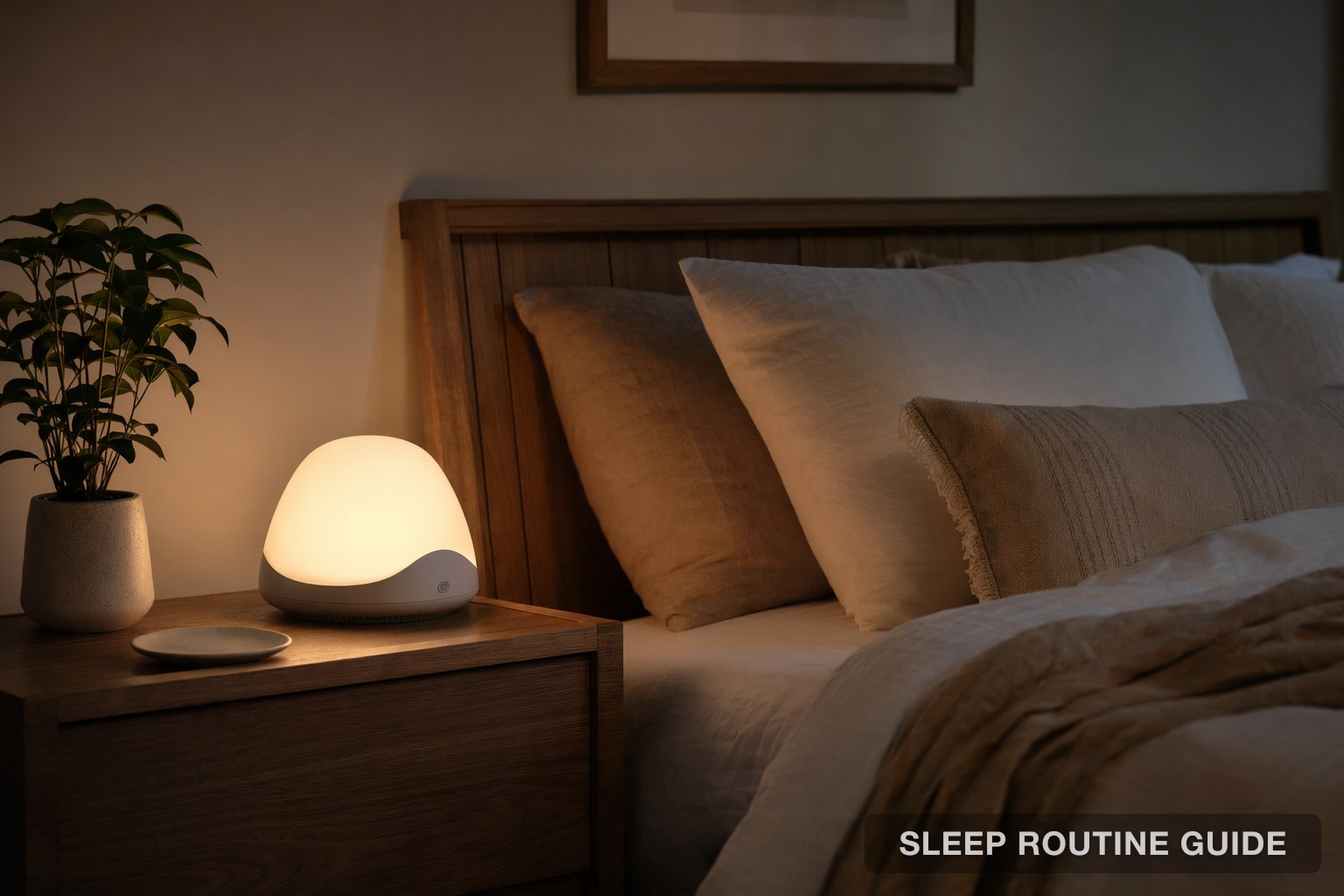
What Is a Sleep Coach and How Does It Help?
A sleep coach improves sleep through behavior, environment, and education, not clinical diagnosis. Human coaches ($100 to $300 per session) offer weekly check-ins and handle complex issues; AI coaches like Naptick provide 24/7 room sensing, wearable sync, and real-time light and sound adjustments from a bedside device with a one-time cost; passive trackers only log data. Expect results in about 3 to 6 weeks. Most people who benefit have no diagnosed disorder, just a busy mind and a bedroom quietly working against them.
A sleep coach is a trained specialist, or an AI system, that helps you build the habits, environment, and mindset for consistent, restorative sleep, without diagnosing or treating a medical condition the way a sleep doctor would. Human coaches run structured intake interviews and weekly check-ins, often using evidence-based methods like CBT-I, and suit complex behavioral issues that need empathy and judgment. AI sleep coaches, like Naptick's Nap companion, work 24/7 from a bedside device: they sense your room (light, sound, temperature, air quality), sync with wearables, and adjust soundscapes and light in real time, then talk you through a wind-down routine without a phone in bed. Most people who benefit don't have a diagnosed disorder; they just have a mind that won't switch off and a bedroom quietly working against them. Expect results in about 3 to 6 weeks of consistent practice.
If you've spent enough nights staring at the ceiling, you've probably searched for some version of the same question: why can't I just fall asleep? Somewhere in that search, you've likely come across the term "sleep coach." But what does that actually mean, and is it worth your time or your money?
Key takeaways
- Sleep coaches are trained specialists or AI systems that identify sleep disruptors and build personalized plans to improve sleep quality.
- Coaching addresses behavior patterns (inconsistent bedtimes, screen use), environmental factors (light, sound, temperature), and sleep hygiene education.
- Human coaches offer weekly consultations and empathetic support for complex issues; AI coaches provide 24/7 real-time environmental adjustments without scheduling constraints.
- Results typically emerge within 3 to 6 weeks of consistent coaching support and habit implementation.
- AI sleep coaches actively intervene with conversational guidance and room sensing, unlike passive trackers that only collect data.
Three approaches get grouped under "sleep coaching," and they work quite differently. Here is how they compare:
| Approach | How it works | Availability | Environment control | Typical cost |
|---|---|---|---|---|
| Human sleep coach | Structured intake plus a personalized behavior-change plan, often using CBT-I | Weekly or biweekly check-ins across a 6 to 8 week program | Static advice (blackout curtains, white noise, thermostat) | $100 to $300 per session, or a package |
| AI sleep coach (e.g., Naptick) | Room sensing plus wearable sync plus conversational coaching that adjusts light and sound in real time | 24/7, always-available nudges | Active and closed-loop: senses temperature, light, noise, and air quality, then adjusts soundscapes and light | One-time device cost, no ongoing subscription |
| Passive sleep tracker | Collects sleep metrics only, with no coaching | Continuous logging | None (data only) | Device cost |
What is a sleep coach?
A sleep coach is someone, or something, that helps you build the habits, environment, and mindset that lead to consistent, restorative sleep.
Unlike a sleep doctor, who diagnoses and treats clinical disorders like sleep apnea or chronic insomnia, a sleep coach works on the behavioral and environmental side of things. The stuff that is often the real reason you're tossing and turning.
That typically includes:
- Helping you build a consistent wind-down routine
- Identifying habits that are quietly working against your sleep (late caffeine, screen time, irregular schedules)
- Teaching relaxation techniques for when your mind won't switch off
- Adjusting your sleep environment, light exposure, and sound
- Keeping you accountable to changes over time
Sleep coaches as human professionals
Human sleep coaches draw from psychology, chronobiology, and behavioral science to assess sleep issues and develop personalized plans. They educate clients on sleep hygiene, teach stress-reduction techniques, and use evidence-based approaches like Cognitive Behavioral Therapy for Insomnia (CBT-I).
AI sleep coaches as bedside behavior-change tools
AI sleep coaching is a 24/7 alternative delivered through room-sensing bedside devices rather than passive trackers. These tools provide conversational guidance and environmental interventions, adjusting light and soundscapes based on real-time sleep data.
Naptick's AI companion, Nap, is one example of this category. It talks users through wind-down routines without requiring a phone in bed. Unlike wearables that merely log metrics, AI coaches respond dynamically to disruptions, nudging users toward healthier patterns through adaptive prompts and habit reinforcement.
How sleep coaches help you sleep better
Sleep coaches improve rest through three interconnected mechanisms that address behavior, environment, and knowledge.
Behavioral habit assessment and change
Sleep coaches begin by examining the behaviors that fragment sleep: inconsistent bedtimes, evening screen use, caffeine timing, or irregular wake schedules. Human coaches conduct structured intake interviews, while AI-based systems analyze self-reported logs or wearable data to detect patterns.
Good sleep hygiene includes setting a steady sleep schedule, following a bedtime routine, and forming healthy habits. Coaches guide incremental shifts, replacing late-night scrolling with a wind-down routine, anchoring wake time to your circadian rhythm, or spacing out stimulant intake. These habit changes build the behavioral foundation for consistent rest.
Environmental optimization: light, temperature, and noise
Your bedroom setting is central to consistent sleep, with lighting, sound, and temperature directly affecting sleep quality. Human coaches provide static recommendations: blackout curtains, white noise machines, thermostat adjustments.
AI sleep coaches like Naptick go further by sensing CO2, air quality, temperature, humidity, light, and noise throughout the night, then adjusting environmental factors in real time through curated soundscapes and light therapy. This closed-loop approach adapts to changing conditions rather than relying on manual intervention.
Personalized sleep plans and education
Sleep hygiene plays a key part in quality rest, but effective coaching tailors those principles to your circumstances. Human coaches build customized plans through iterative consultation; AI coaches deliver conversational guidance through bedside devices or apps, adjusting recommendations based on tracked progress.
Knowing how sleep coaches help is one thing. Understanding what the coaching process actually looks like helps you decide whether it's right for you.
How does sleep coaching work?
Initial sleep assessment and goal setting
Sleep coaching starts with understanding your current patterns and priorities. A pediatric sleep consultant, for instance, typically begins by reviewing sleep history, the sleep environment, medical considerations, and family culture, then creates a unique sleep plan tailored to those inputs. AI-powered sleep coaches, by contrast, track sleep patterns automatically.
Naptick, for instance, combines wearable sync, room sensing, and an AI coach to remove manual sleep-diary entry and deliver continuous environmental feedback from the first night.
Ongoing support and habit tracking
Human coaches typically schedule weekly or biweekly check-ins throughout a multi-week program, adjusting the plan based on sleep-diary entries and reported progress. AI coaches instead offer always-available nudges rather than scheduled sessions.
They monitor wearable data in real time, prompt incremental habit adjustments through conversational cues, and trigger environmental changes (light therapy, soundscapes) automatically when patterns shift. This continuous loop suits habit formation and environmental optimization, but lacks the interpretive depth a human coach brings to behavioral conflict.
Typical timelines and success metrics
Habit change generally requires three to six weeks of consistent practice. Human coaching programs often run six to eight weeks, with measurable outcomes including reduced time to fall asleep, fewer night wakings, and improved next-day energy. AI coaching timelines vary. Some users see environmental improvements (better room temperature, optimized light exposure) within days, while deeper habit shifts follow the same multi-week curve.
Track sleep duration, wake-up consistency, and subjective restfulness, not just total hours, to judge whether the approach is working.
AI sleep coaches: how technology delivers personalized support
AI sleep coaches are a distinct category from passive sleep trackers and medical devices. Rather than simply collecting data, these bedside systems actively intervene, adjusting environmental conditions, delivering conversational guidance, and combining multiple interventions in real time.
Naptick's Nap AI companion is one example of this approach: a wellness and behavior-change tool that combines room sensing, wearable synchronization, light therapy, curated soundscapes, and conversational coaching.
Room sensing and automated environmental interventions
Naptick's room sensor monitors temperature, light, ambient noise, and air quality, then adjusts soundscapes and light therapy to maintain conditions that support sleep onset and continuity. If room temperature rises mid-sleep, the system can layer in cooling white or pink noise to offset discomfort while dimming or warming the light output to prevent arousal.
Conversational guidance without screens
Naptick's Nap AI companion delivers bedtime prompts and coaching cues through voice, which removes the need for a phone in bed. Users receive spoken reminders to wind down, adjust breathing, or shift position, timed to their circadian rhythm and wearable-tracked sleep stages, all without touching a screen.
Integration with wearables and light therapy
Naptick syncs with Apple Watch, Oura, Whoop, and other wearables, using the data to trigger light therapy sequences or adjust soundscapes when wearable metrics indicate shallow sleep or restlessness. This moves beyond passive logging. If a wearable detects an elevated heart rate during a light-sleep phase, the AI coach can start a calming soundscape or shift to warmer light, which may help you settle back toward deeper sleep more quickly.
Conclusion
So the question is whether you need one.
Some of this probably sounds familiar: you're tired but your mind won't quiet down, you reach for your phone the second you can't sleep, or you've never really thought about what your bedroom is doing to your rest beyond "it's dark and the bed is comfortable."
You don't need a diagnosed sleep disorder to benefit from a sleep coach. Most people who would benefit don't have anything clinically wrong with them. They just have a mind that won't switch off and a bedroom that is quietly working against them, which, it turns out, describes most of us most nights.
Frequently asked questions
What does a sleep coach do?
A sleep coach is a trained specialist or AI tool that helps identify sleep disruptors, optimize the bedroom environment, and build sustainable sleep habits through personalized education and behavior-change support. They work with people who struggle with insufficient rest, trouble falling asleep, or poor sleep patterns.
How much does a sleep coach cost?
Human sleep coaches typically charge $100 to $300 per session, or offer package deals for multi-week programs. AI sleep coaches usually involve a one-time device cost with no ongoing subscription fees, which makes them more affordable for long-term use.
Do sleep coaches need certification?
Certification is not legally required, but many coaches pursue credentials from programs like the Spencer Institute or IPHI to demonstrate expertise in behavioral interventions and sleep science. These programs cover psychology, chronobiology, and evidence-based sleep hygiene strategies.
What is the difference between a sleep coach and a sleep tracker?
Sleep coaches, human or AI, deliver active interventions, personalized guidance, and behavior-change support. Sleep trackers passively collect data without coaching, offering metrics but no actionable plan. AI sleep coaches also adjust environmental conditions and provide conversational guidance in real time.
Can AI sleep coaches replace human sleep coaches?
AI coaches suit habit formation, environmental optimization, and 24/7 accountability. Human coaches are better for complex behavioral issues, co-sleeping challenges, or situations that need empathy and nuanced judgment. The choice depends on the complexity of your sleep needs.
How long does it take to see results from sleep coaching?
Habit change generally requires three to six weeks of consistent practice. Most coaching programs run six to eight weeks, with measurable outcomes including reduced time to fall asleep, fewer night wakings, and improved next-day energy.
Is Naptick a medical device?
No. Naptick is a wellness and behavior-change tool, not a medical device, and it does not diagnose or treat medical conditions. It optimizes sleep habits through environmental adjustments, light therapy, and conversational guidance tailored to individual sleep patterns.
This article is for general informational purposes only and is not medical advice. A sleep coach addresses habits and environment, not clinical sleep disorders; if you have symptoms of a condition like sleep apnea or chronic insomnia, consult a qualified healthcare professional.
Reviewed for accuracy by the Sleep Routine Guide editorial team. Claims about sleep coaching, hygiene, and the sleep environment were cross-referenced against the Sleep Foundation and the other cited sources as of the review date. Last reviewed: July 21, 2026.
Last verified: 2026-07-21
Sources
- What Is Sleep Coaching? — WebMD
- Mastering Sleep Hygiene: Your Path to Quality Sleep — Sleep Foundation
- How to Design the Ideal Bedroom for Sleep — Sleep Foundation
- Sleep Coach: Definition, Benefits, How It Works, Costs & Certifications — WellMeRight
- How Do Sleep Coaches Help Clients? — Spencer Institute
- What Is a Pediatric Sleep Coach or Consultant? — Rockabye Rockies
- 25 Things To Do On Your Phone Instead of Doomscrolling — Nibble
- Healthy Alternatives to Doomscrolling — Blue Cross VT